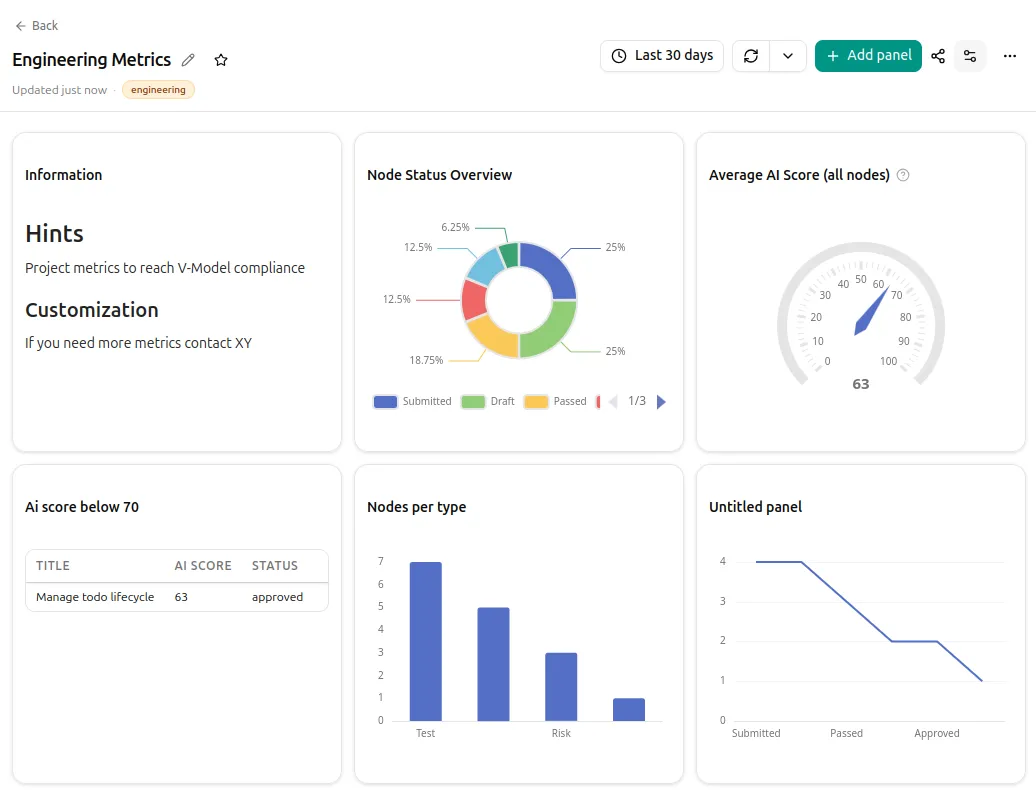
Engineering
For teams that want requirements, delivery, and dependencies to hold together without maintaining three tools for it.
View Engineering Use Case
The modern way of specification engineering
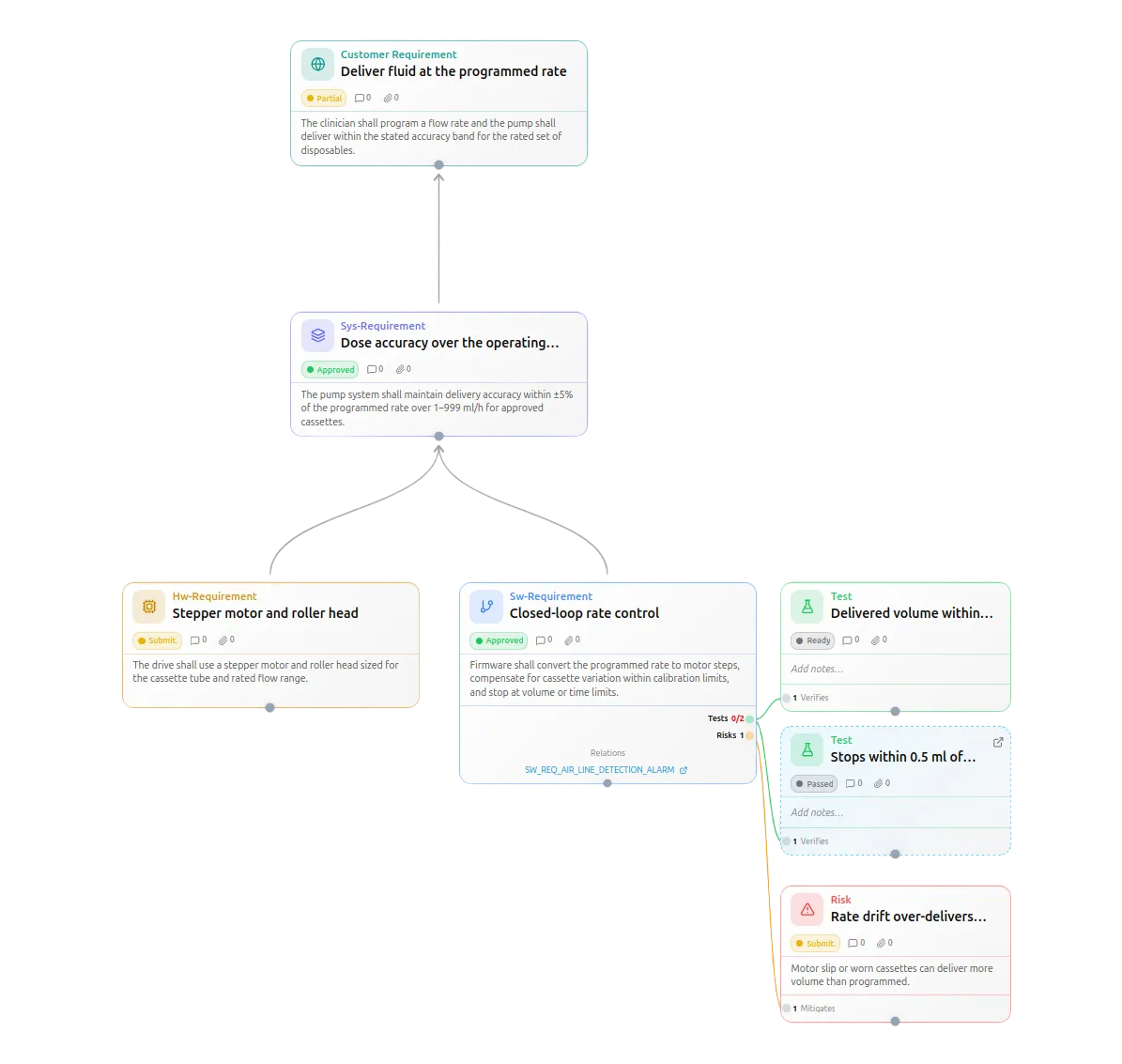
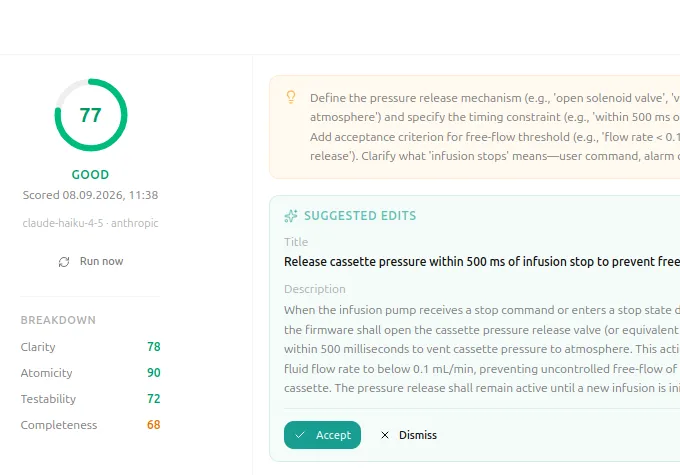
OakCore brings requirements, tests, risks, and delivery into one shared context. Teams see early what a change will affect and keep a clear view even in complex projects. AI also understands relationships and full context.
Our approach
OakCore does not primarily split work by layers such as customer, system, or software. Instead, content is grouped by features, so what belongs together in engineering stays together in the tool.
The foundation
Requirements, tests, risks, and delivery are connected. Every connection describes how two elements relate and can be used semantically. That keeps the full context in view, and relationships can be used efficiently for AI-based analysis.
See graph and contextThe AI in OakCore works with your project rather than with general knowledge. It knows the requirements, how they relate, and where delivery stands, so it can support you as well as possible.
In comparison
Compared to classic RM tools, spreadsheets, and point solutions.
Regulated development
Medical devices, automotive, rail: the ground rules are the same everywhere. Requirements have to be traceable, changes have to stay controlled, and evidence has to be available at any time. Spread across separate documents, that turns into manual work before every audit.
Requirements, tests, and risks live in the graph and are connected. Tickets, architecture, and code are linked through integrations, without copying them.
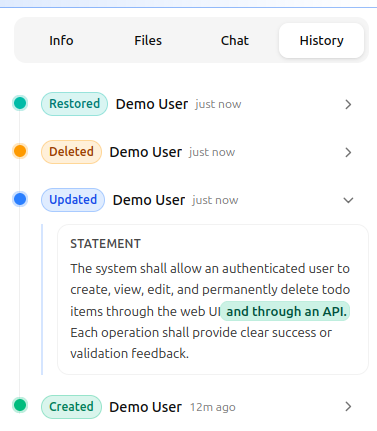
Changes are versioned, assessed with impact analysis, and approved through reviews. The audit trail builds itself, so the evidence is there before anyone asks for it.
Industries and relevant standards:
ISO 9001 and comparable QM standards
Use cases
The same specification, three points of view. Every role gets the view it needs to make decisions.
For teams that want requirements, delivery, and dependencies to hold together without maintaining three tools for it.
View Engineering Use Case
For leaders who want to know where a project stands, which risks are open, and what a change really costs.
View Leadership Use Case
For teams that negotiate requirements with customers and suppliers and have to keep them in sync with delivery.
View Business Use CaseIntegrations
Jira, GitHub, GitLab, Enterprise Architect, and your CI pipelines all connect. Tickets and code stay where your team already maintains them. OakCore holds the link to the specification.
See integrations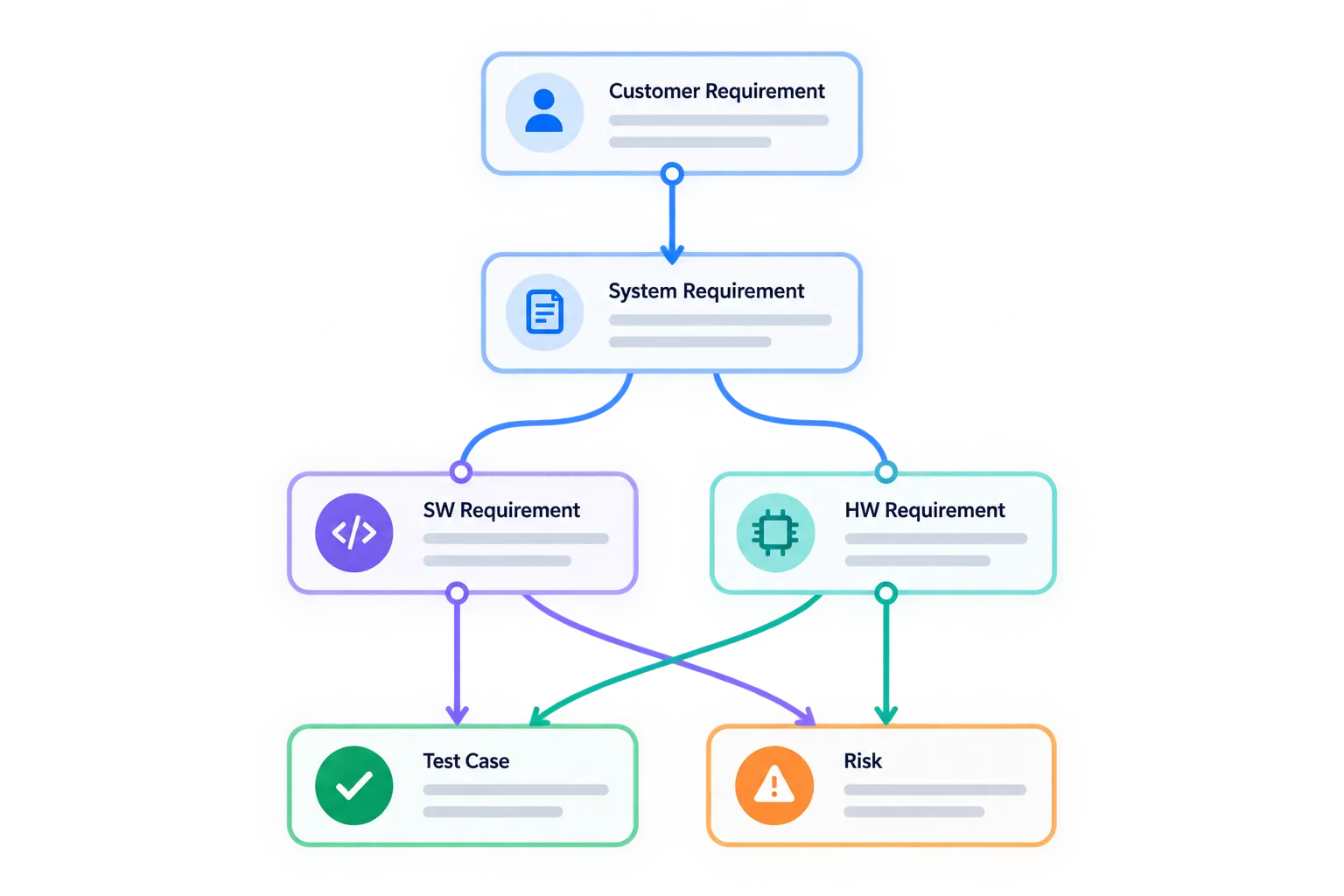





Security and privacy
Data protection and the requirements for trustworthy AI are part of how we build OakCore, not something added later on.
Teams building requirements-driven products who need to stay on top of complexity: product, systems engineering, quality, and development. Especially when Excel, Word, or tickets are no longer enough and traceability, reviews, or standards like ISO 26262 and IEC 62304 matter.
OakCore is built as a modern alternative. Requirements live in a connected graph instead of rigid lists. You keep traceability, versioning, and governance, but work faster and with more transparency. That lowers development and approval costs and improves team satisfaction through intuitive, modern tooling.
Thoughts on specification, quality, and modern product development.
A short tour of quality standards, why quality will never become a no-op, and why solid specification work remains a core skill even in the age of AI.
Read
When code becomes a commodity, specification becomes the core competency – challenging Scrum, tickets, and conventional development processes at their foundation.
ReadIn a 30–60 minute session, we walk through a concrete example of how OakCore streamlines engineering workflows and supports your team from day one. You speak directly with the founders.